
Smelly Drains in Cobham
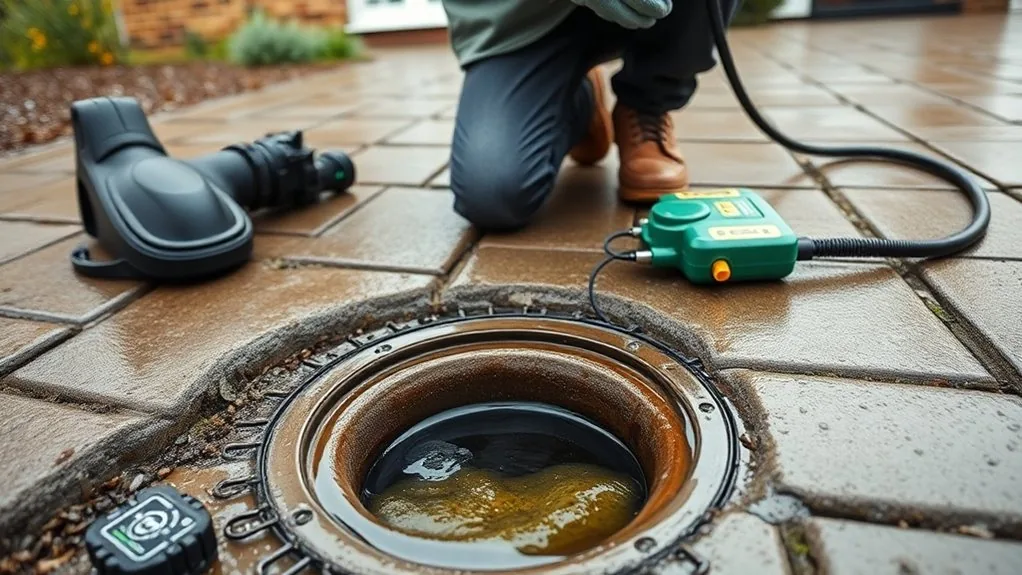
If you’re dealing with smelly drains in Cobham, it’s often caused by fats, scale, trapped waste or damaged pipe joints allowing foul gases to escape.
We use CCTV surveys and flow tests to identify the issue, then clear blockages or repair pipes to stop the odours.
Call us for a fast quote or emergency callout in Cobham.
Although the term sounds simple, smelly drains are typically a symptom of underlying issues within your drainage system, such as trapped organic waste, bacterial growth, stagnant water, or defects in venting and seals that allow sewer gases to escape. When you notice a bad smell, you’re dealing with volatile compounds released by drain bacteria breaking down fats, food residues, hair, and other debris.
In technical terms, a “smelly drain” is a localized failure of hygienic performance in the pipework, trap, or venting arrangement. It’s not just unpleasant; it indicates conditions that can corrode pipework and support biofilm growth. You’ll usually manage it by restoring water seals, removing deposits, applying targeted drain bacteria treatments, and, where appropriate, using compatible odor neutralizers—not just masking sprays.
When you notice persistent unpleasant odours, slow draining water, gurgling noises from pipes, or frequent drain blockages, your system’s hydraulics and venting are already under strain. These symptoms indicate potential build-up of organic waste, partial obstructions, or ventilation faults that won’t fix themselves. By recognising these signs early, you can schedule targeted cleaning or repairs before they escalate into costly structural or sanitary issues.
Even after you’ve cleaned the sink and taken the rubbish out, a persistent, sour or sewer‑like smell from plugholes, floor drains, or outside gully pots is a clear indicator that your drains in Cobham may be compromised. These odours typically mean biofilm, decomposing organic waste, or trapped gases are present inside the pipework or trap assemblies.
You’ll often notice the smell intensifies when you run hot water, use the dishwasher, or after a period of disuse. At that point, basic air fresheners won’t help; you need targeted odor elimination and proper drain deodorization. That usually involves mechanically cleaning internal pipe surfaces, flushing with appropriate disinfectants or enzyme treatments, and checking traps and vents so smells are removed at source, not just masked.
Ironically, one of the clearest signs of smelly drains developing in your Cobham property is water that’s suddenly slow to clear from sinks, showers, or baths. This usually indicates partial blockages from fats, hair, soap scum, food waste, or scale narrowing the internal diameter of the pipe and trap.
You shouldn’t ignore this. As flow slows, organic matter lingers, breaks down anaerobically, and starts releasing foul gases. A targeted drain cleaning plan restores hydraulic efficiency and supports odour prevention before smells become entrenched. This may involve mechanical rodding, high-pressure water jetting, or enzyme-based treatments, depending on pipe material and severity. If several fixtures drain slowly, you’ll likely need professional diagnostics, such as CCTV drain surveys, to identify deeper obstructions or structural issues.
Slow drainage isn’t the only early warning that your Cobham property’s pipework is heading for odour problems; gurgling noises from sinks, baths, or toilets are another key indicator. That sound usually means air is being dragged through trapped wastewater, often due to partial blockages, inadequate venting, or poorly graded pipe runs.
You shouldn’t ignore this. Persistent gurgling can allow foul gases to escape if water seals in traps are disturbed. A technical survey will check trap depths, vent pipes, and fall gradients, then pinpoint restrictions in the line. Targeted drain cleaning removes accumulated fat, scale, and debris that cause airlocks. Where pipes run through unheated spaces, pipe insulation helps stabilise temperatures, reducing condensation and microbial growth that contribute to both smells and noise.
When your sinks, showers, or toilets keep clogging despite plunging or using shop-bought drain cleaners, it’s a sign there’s an underlying issue in your Cobham property’s drainage system rather than just “bad luck.” Recurrent blockages typically point to structural defects (such as cracked or misaligned pipes), heavy fat and scale build-up, root ingress, or poorly designed pipework with inadequate fall.
You’ll often notice slow-draining fixtures, rising water levels, or foul smells returning soon after temporary DIY fixes. At this stage, you need a diagnostic approach, not stronger chemicals. Professional drain cleaning using high-pressure water jetting, mechanical descaling, and CCTV surveys removes accumulations and identifies defects. Targeted repairs, pipe re-lining, or reconfiguring gradients restore flow capacity and provide long-term odour prevention, protecting both hygiene and pipe integrity.
Although every property is different, smelly drains in Cobham almost always trace back to a few technical issues. Odours typically arise when flow is restricted, traps lose their water seal, or organic waste accumulates and feeds drain bacteria. Understanding the root cause helps you target effective odor control instead of masking the smell.
When you call us about a smelly drain in Cobham, we start with a structured diagnosis, often using CCTV inspection to locate blockages, structural defects, or trapped waste gases. Depending on what we find, we’ll use targeted clearance methods such as high-pressure water jetting or mechanical rodding to restore flow and remove residue. If the drain’s damaged or worn, we’ll explain whether a local repair or full relining is the most efficient long-term solution.
Before any cleaning or repairs begin, effective treatment of smelly drains in Cobham starts with a precise diagnosis, often using CCTV drain inspection to see exactly what’s happening inside your pipes. You don’t just want to mask drain odor; you need to know what’s causing it.
An engineer feeds a high-resolution camera, guided by advanced CCTV technology, through access points such as manholes or internal cleanouts. Live footage reveals fat deposits, silt, root intrusion, cracked joints, or stagnant water traps that allow gases to escape. The operator records distances and depth, mapping defects to your property layout. From this, you’ll get a clear report identifying the exact source of the smell and the most efficient, targeted remedial options.
Once CCTV has pinpointed the exact cause of the smell, high-pressure water jetting is usually the most efficient way to clear it and restore proper flow. Using a specialised jetting unit, we deliver water at controlled high pressure through a flexible hose, directed precisely at the affected section of pipework.
This process scours internal pipe walls, stripping away fat, scale, silt, and organic buildup that trap gases and create persistent drain odor. Unlike basic cleaning solutions, jetting reaches around bends and through long runs, restoring the pipe’s full bore without abrasive damage. You get thorough, uniform cleaning, reduced risk of future blockages, and immediate improvement in flow and ventilation, which helps eliminate smells throughout your Cobham property’s drainage system.
Although high-pressure jetting resolves most odor-related issues, we also rely on rodding and other mechanical clearance methods where access, pipe condition, or blockage type demands a more controlled approach. Rodding lets us physically break down compacted fat, soap, or scale that’s causing stagnant waste and sulphurous smells in your Cobham property.
We feed flexible steel rods or mechanical cutters through access points, working systematically along the line. This gives precise control, reducing risk to fragile or older pipework and helping maintain correct gradients so waste flows efficiently.
As part of thorough drain maintenance, we often combine rodding with targeted pipe inspections to confirm the line is fully clear, identify any recurring snag points, and verify that trapped gases can disperse properly.
When investigation shows that odours are linked to cracked pipes, open joints, root intrusion, or failed seals rather than a simple blockage, we move from clearance to targeted repair or relining. We’ll review CCTV footage to pinpoint structural defects, then decide if a localised patch, full-length liner, or pipe replacement is most appropriate.
You’ll typically need relining when damaged sections allow Drain bacteria and gases to escape, or groundwater to infiltrate, even after thorough cleaning. We select resin systems compatible with your existing pipe materials (clay, cast iron, uPVC) to guarantee proper bonding and long-term performance. Where deformation, severe displacement, or collapsed sections exist, we’ll specify excavation and renewal instead, restoring correct gradients, joint integrity, and a gas-tight, odour-free system.
Because blocked and smelly drains can escalate quickly, our engineers are strategically positioned across Cobham to deliver a fast, time-bound response wherever you are. When you call, we triage the issue, identify likely odour sources, and dispatch the closest engineer with the correct equipment, from CCTV survey cameras to high-pressure jetting units.
You’ll get an ETA, and we’ll work to stabilise the system first: restoring flow, venting trapped gases, and isolating affected sections. Once the immediate smell is under control, we’ll assess structural integrity and advise on targeted drain maintenance to prevent recurrence. Our response model reduces downtime, limits water damage risk, and guarantees your drainage network is quickly returned to safe, hygienic operation across domestic and commercial sites.
Fast attendance is only part of the solution; you also need clarity on who’s actually responsible for fixing smelly drains. In most Cobham properties, you’re responsible for internal pipework, traps, and any private runs up to the point they connect with a shared or public sewer. If the odour sources are within this private section, you’ll usually need to arrange and fund drain cleaning or repairs.
Once a pipe becomes shared with neighbouring properties, responsibility typically transfers to the water company. They’re then accountable for investigating persistent smells, structural defects, and blockages on that shared line. Landlords are normally responsible for drains serving rented properties, except where issues lie in the public sewer network, which again falls to the statutory undertaker.
Although smelly drains can usually be cleared quickly, long‑term control depends on routine prevention rather than one‑off fixes. You’ll avoid most issues by treating your pipework as critical infrastructure and applying disciplined drain maintenance rather than reactive “quick cures”.
When persistent odours point to deeper issues in your drainage system, you need a team that treats your pipework as engineering, not guesswork. We analyse gradients, trap integrity, venting, and junction design to pinpoint where drain bacteria and gases are accumulating, then apply targeted remediation rather than temporary cover‑ups.
Our engineers use CCTV diagnostics, smoke testing, and pressure checks to locate failures that drive recurring smells. Every recommendation is based on measurable data, not trial and error.
| What You Get | How It Solves Smells |
|---|---|
| Bacteria‑focused cleaning | Cuts biofilm where drain bacteria thrive |
| Engineered odour control | Restores water seals and air movement paths |
| System-wide performance test | Confirms your drain network is smell‑tight |
You’ll naturally want clear answers on response times, typical costs, what you can safely try yourself, and whether we cover your specific part of Cobham. In this section, you’ll find concise, practical guidance on each of these points so you can decide the most efficient next step. We’ll outline what you can expect from us and what you can realistically handle on your own without risking further damage.
Because foul odours from drains can indicate active bacterial growth, partial blockages, or venting issues, response speed matters as much as the fix itself. When you contact us about smelly drains in Cobham, we typically offer same-day attendance for urgent cases, aiming to be on-site within a few hours, subject to access and location.
On arrival, we rapidly assess the system: trap seals, gully condition, stack vents, and internal pipework. Using appropriate diagnostic tools, we trace the odour source, then implement targeted cleaning, flushing, or vent corrections. Most straightforward odour problems are resolved in a single visit.
We’ll also advise on ongoing drain maintenance and odour prevention measures, so the issue doesn’t recur once the immediate smell is eliminated.
Fast attendance is only part of the equation; you also need clear costs for resolving smelly drains in Cobham. Pricing depends on access, length of pipework affected, and what’s generating the drain odor—fat deposits, root ingress, or a collapsed section.
You’ll typically receive upfront cost estimates after a basic site inspection or remote description. Simple internal trap or gulley cleans are usually at the lower end, while external stack work, long runs, or CCTV diagnostics increase the price.
Expect different rates for:
You’ll always get a fixed, written quote before any remedial work begins, so you know precisely what you’re authorising.
Although professional diagnostics are often the quickest route to a lasting fix, there are a few safe checks you can run before calling a smelly drains specialist in Cobham. Start by flushing the trap with very hot water and detergent, then remove and clean the plughole strainer. If accessible, inspect the u‑bend for food sludge, hair, or soap scum and clear it mechanically.
Some DIY remedies help with light odours: a controlled mix of baking soda and vinegar, followed by hot water, can break down organic film. Use chemical solutions with caution: always follow the manufacturer’s instructions, never mix products, and ventilate the room. If smells persist, gurgling increases, or water drains slowly, stop experimenting and get a professional survey.
If DIY checks haven’t cleared the smell, the next step is confirming we can attend your property quickly and legally in your part of Cobham. We cover all major towns and rural areas, including Maidstone, Medway, Canterbury, Ashford, Dartford, Tonbridge, Tunbridge Wells, Thanet, Gravesham, Swale, Folkestone & Hythe, and surrounding villages.
Our coverage is designed around rapid response to plumbing emergencies and scheduled drain maintenance. We check access routes, parking constraints, and property type (domestic, commercial, managed blocks) before confirming attendance, so you know exactly what’s feasible.
If you're unsure whether you’re inside our core zone or on the border, you can provide your postcode. We’ll confirm availability, response time, and any call-out variations before you commit.
Yes, smelly drains can indicate more serious structural problems in your plumbing system. These smells may be caused by cracked pipes, misaligned joints, or failing seals that allow waste gases to escape. A CCTV drain survey can identify issues such as collapses, root ingress, or dislodged sections, and early repairs can help prevent leaks and further damage.
Yes, there are eco-friendly products that are safe for temporary odour control. Biodegradable enzymatic drain cleaners break down organic matter without using harsh chemicals. Natural deodorising agents like baking soda and vinegar can neutralise smells when followed by a hot-water flush. Avoid bleach or caustic products as they can harm microbial balance and damage pipes and seals over time.
Yes, fixing smelly drains can increase the value of your property. It shows buyers and surveyors that the drainage system is well maintained and reduces the risk of future problems. Providing maintenance records and inspection reports can help support a higher valuation and smoother sale.
A professional drain inspection should be carried out annually in Cobham homes. If your property is older, has trees nearby, or a history of blockages, inspections should be done every six months. Regular drain cleaning and CCTV surveys help identify issues such as root ingress, grease build-up, and pipe defects before they become serious.
Yes, pets or wildlife can cause smells from outside drains. Pet hair, faeces, or food scraps can get into the drains, and wildlife such as rodents, birds, or slugs may nest or die inside the pipes. Check drain covers for gaps, use mesh guards, clear debris, flush with enzyme cleaners, and consider a CCTV drain survey if the smell continues.
When foul odours start rising from your sinks, showers, or outside drains, you need a targeted fix that tackles the actual cause, not just masks the smell. You’ll benefit from a structured approach: inspection, diagnosis, and precision drain cleaning using mechanical jetting, root cutting, or descaling, depending on what’s restricting flow and trapping waste.
We’ll locate blockages, leaks, or defective traps with CCTV surveys and functional flow testing, then implement lasting odour prevention measures. That can include trap repairs, vent pipe checks, gully clearing, and sealing redundant connections.
You don’t need to guess which product or DIY method might work. Book a visit, get a clear report, and have your smelly drains in Cobham restored to safe, hygienic operation today.